“In February there is everything to hope for and nothing to regret.” – Patience Strong

February’s been quite an active month for me.

It started with attending Devoted & Disgruntled which I try to do every year. For those of you unfamiliar with it, it’s a two-and-a-half-day conference that asks the question ‘What are we going to do about theatre and the performing arts?’ Attendees bring with them questions they want to explore and discuss, debate, or ask for help with. In a previous year I asked for help with how to talk about my work, and out of that discussion this website was born.

This year it was delivered fully online for the first time (as you’d expect) and was a splendid opportunity to come together with colleagues in the sector and hear how life’s been since the last one. Needless to say it’s been really tough, especially as a high proportion of attendees are freelancers (which I would be if I didn’t have my day job). But there was the most amazing feeling that we’re all in this together, and we will get through this, somehow. Theatre is an ancient art form you can’t kill off however hard you try. How you make a living from it and keep the home fires burning is another question.

I joined discussions around all manner of topics, from how to get arts council funding for projects to how can we make theatre more inclusive? One of the topics I’m still mulling over is, do you need to add references to COVID-19 in plays you’re writing that are not about COVID-19? There was a lot of discussion in this group about projects that have been put on hold because of the pandemic and are waiting to go on, booked for touring in 2022; and then projects created during the pandemic, responding to the world as we’re finding it now, which will want to be produced once theatres are open again. And of course there are questions like: how will the world be when we are in theatres again? Will an audience member be wearing a mask when actors on stage won’t be? If it’s a naturalistic play does that make it absurd, as the goal of the play is to represent the world as it is? Or actually will we have had enough of COVID-19 by then and we’ll be wanting to see plays without any reference to it, as we suspend our disbelief and dream of a time before or in the future where COVID-19 isn’t a feature?

There’s no real answer. However, as my plays have a more mythic and fantastical bent it was felt that maybe those kinds of stories transcend time, and you don’t need to reference COVID-19 in that kind of work. As long as the play you’re writing feels emotionally true to the times we live in -even if the actors aren’t commenting on the new rule of 6, for example- it will still feel true to an audience. If you have a strong view either way I’d be interested to hear it. Please add your comment at the bottom of the blog. However quickly we get out of lockdown, COVID-19 is with us and as all theatre holds some kind of mirror to society, questions around this will be with us for a while.

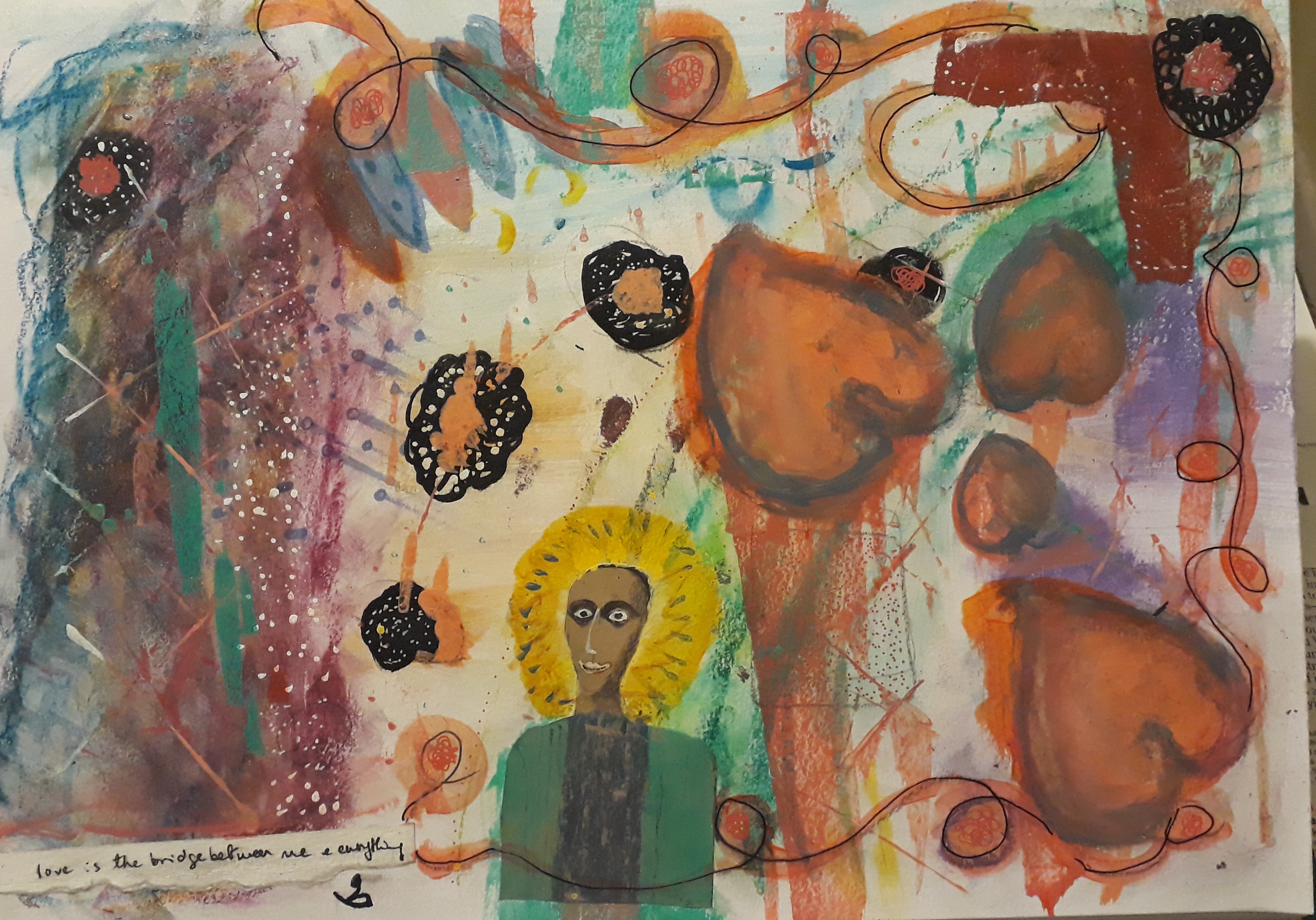
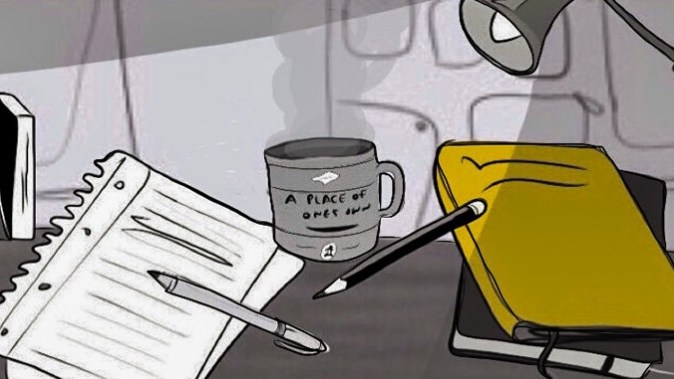
One light in the dark however was when writer-director-producer Jennifer Lunn, who I’ve worked with previously, shared a quote from a writer friend of hers Aliki Chapple. We were discussing whether you can really plan a production in 2022 for a play that felt urgent to get on in 2020? Will that play still feel relevant for an audience? Her response was this quote below. I loved it so much I just had to illustrate it:

This quote has given me comfort ever since I heard it, and the afternoon after D&D finished, I was inspired to go back and write the full synopsis of my new play that’s been on ice since the pandemic. It felt good to be looking at that story again, and I think I might have sorted out the ending. So watch this space as I may have more news on that project soon! If you’re interested in reading more about the discussions at D&D see the website.

My novel project

As far as my novel goes, after a month of not looking at it, I read the whole first draft through. I’ve been following NaNoWriMo’s workbook on redrafting and the recommended next step is to ‘read it like a reader’ (so for the pleasure of the story rather than to correct/change anything). I wasn’t convinced it was going to help, but it ended up being very similar to having a play table read by actors: the moment you hear it aloud, you can tell what’s not landing; the moment I read the draft as a reader, I could feel what was and wasn’t working. Something that I was reminded of when reading the draft was a tip writer Philip Ridley said in a workshop I attended with him once. This is not exact, but he said something along the lines of:

“An audience only remember how you make them feel, little else.”

Philip Ridley

He went on to qualify it with something like, “they might remember how this bit was clever and that bit made them think, but a sure fire way to leave a mark is to make them feel something.” We are all the sum of stories we’ve heard over our lives, we know instinctively how they work. Reading the first draft as a reader -to enjoy the story and get wrapped up in the emotional journey of the characters- illuminated a lot. Not least that I have a lot of work to do! I love the process of writing, of crafting a story and am looking forward to getting stuck in.

Lucy recommends

I just wanted to share a couple of online events I’ve come across happening next month which might be of interest:

The girl on the altar by Marina Carr

I first read a play by Marina Carr during my ’12 new playwrights in 12 months’ blogging a few years ago. I absolutely loved her writing but haven’t seen any performed so I was very excited when the Kiln’s latest email hit my inbox announcing a stream of a rehearsed reading of her new play. Check it out here.

Imagining the city

Another email hit my inbox, this time from the National Writing Centre. During February they’ve been running virtual residencies with five writers from UNESCO cities of literature, exploring their connections between their own city and Norwich. Some virtually visiting it for the first time. I thought this was a really interesting idea and recommend checking out the articles on the website. They have a couple of free events too. Find out more here.

Well, that’s it from me for this month. Stay safe and take care. Catch you in March!

xxx

Posted in Culture, Development, Novel, Script, Theatre, Uncategorized, Writing | Tagged , , , , , , , , , | Leave a comment

“January brings the snow, makes our feet and fingers glow.” – Sara Coleridge

I can’t remember why I stopped writing this blog. The Future is Mine was shortlisted for the Introduce Yourself Festival at Finborough Theatre in 2018, which was really exciting, but other projects seemed to fall away. Nothing really stuck. I don’t feel like myself if I haven’t got a project on the go or something in the production works, but I guess that’s how it goes. That’s the ups and downs of being a writer.

After attending an awesome Arvon course with writer Chris Thorpe (do check him out if you’re not familiar with him), in late 2019 I finally started writing a new play. I was also branching out, exploring other forms of writing, and then lockdown hit.

I don’t need to tell you how hard it’s been. I hope you and your family are safe. I’ve felt incredibly lucky that I haven’t been sick, despite commuting up until the week before the official lockdown in the UK. I’ve been working from home ever since.

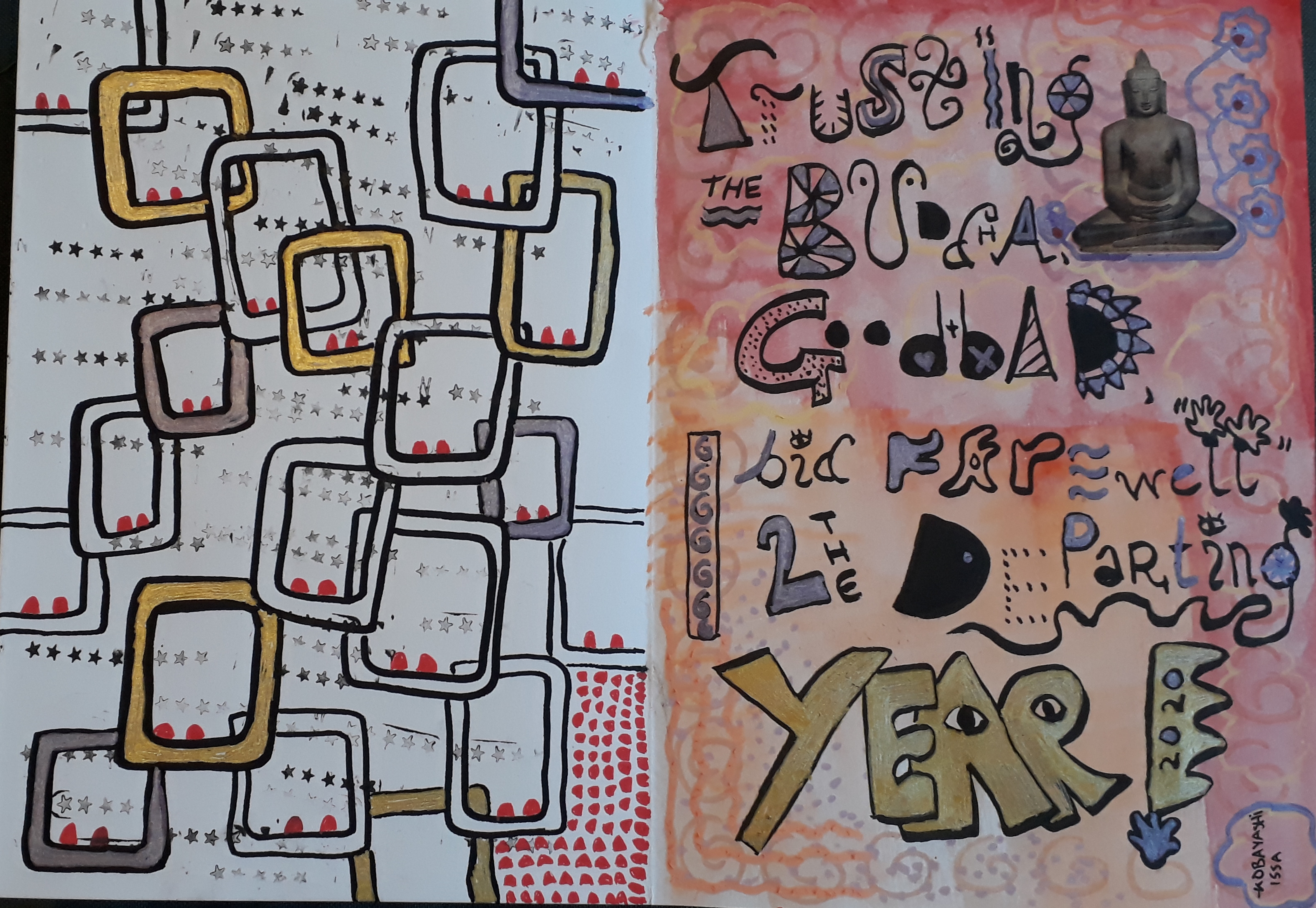
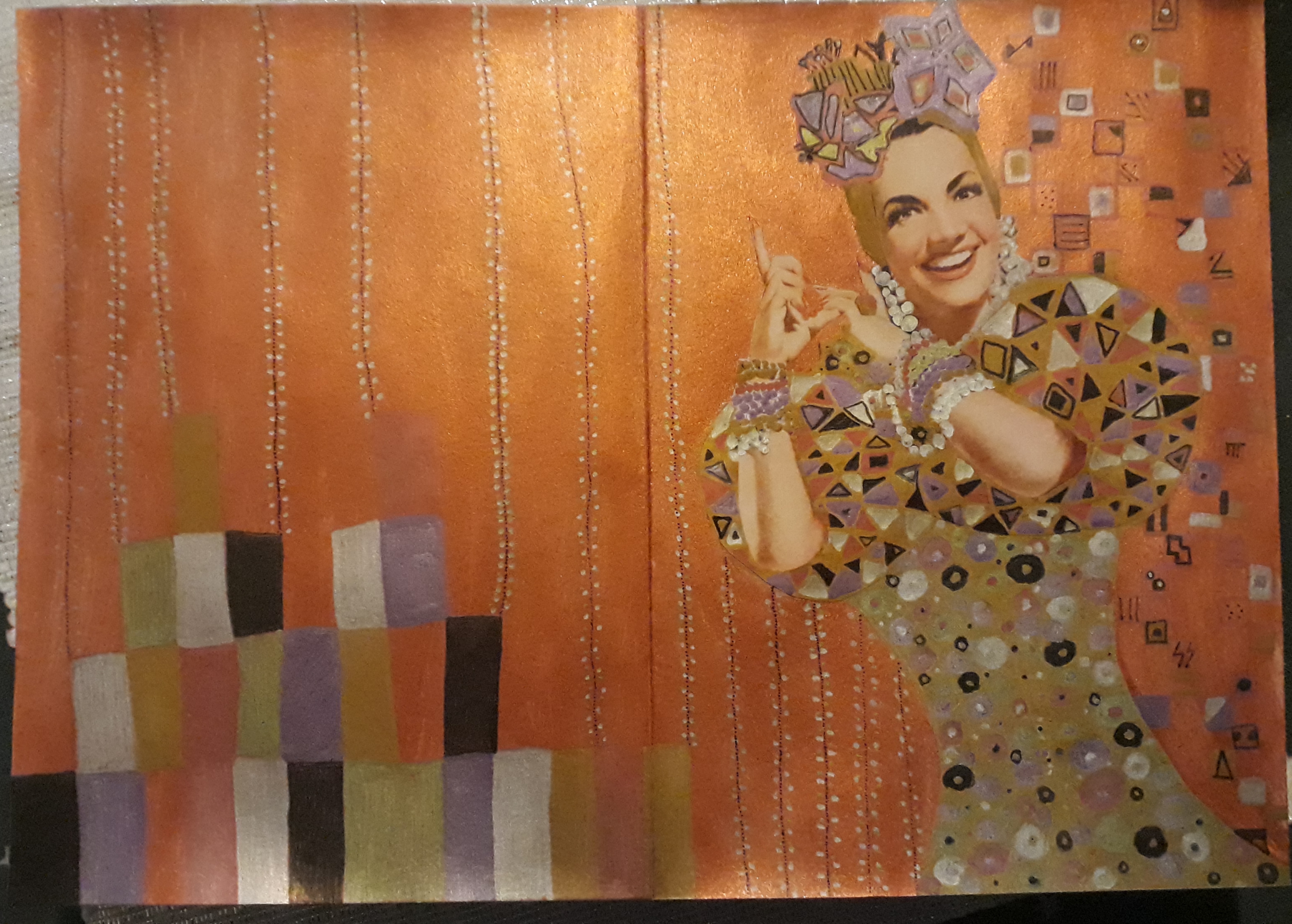
Words for plays have been hard to come by so instead I’ve been getting into visual art. It’s always been an interest of mine, and amongst other things, 2020 became a year of art courses for me. I explored drawing, painting, collaging, creative embroidery and art journaling primarily as a way to relax. I surprised myself by my energy for it, and it’s something I’m continuing this year too. Here are some examples of my work.

I follow art teacher Nicholas Wilton at Art2Life (if you’re into art do look him up) and early into lockdown he vlogged posing this question:

What does this time make possible for you?

Nicholas Wilton

It really picked me up and turned my thinking around from focusing on what I’d lost with the lockdown to what I could gain from it.

It didn’t take long for my mind to turn onto an idea for a novel I’d had for about the last ten years. I’d actually finished a course in Feb 2020 with writer Zoe Gilbert on fantastical fiction which helped me think about the story. It was when I was in my ‘exploring other forms of writing to help my plays’ phase and I actually finished the course discovering a way into this novel story, but decided to put it on the backburner and get back to my play. Where was I going to find the time to write a novel? I thought.

Now words for plays were hard to come by, but on the flip side I had all the time in the world to write a novel, and perhaps it could be the focus I needed.

I spent just 30 minutes every week day morning before work, just writing what came next in the story. I had a brief overview of generally what happened, and I already knew the end (which is essential for me to be able to get into any writing project). Long story short I finished the novel in three months (with the help of Camp Nanowrimo and another course with Zoe Gilbert) and then after a rest I finished typing it all up just before Christmas.

Broadly speaking it’s a fantastical novel set in a world not dissimilar to our own, but one where society believes magical people can’t be trusted. That’s all I’ll say for now, but hopefully that’s whetted your appetite. My work has always had a fantastical bent, but right now, I need fantasy more than ever and working on this project has been the tonic I needed.

Ursa, the play project I was working on before lockdown is still floating around in my mind, but as I just don’t feel like going back to it yet, completing a second draft of the novel by the end of 2021 is my next goal.

Something I’ve learnt about myself over the last year is that my creativity has many forms and great things happen when I just follow the flow. As Nick Wilton says, experiencing difference and doing different things makes us feel alive, and as my writing hero Julia Lee Barclay-Morton says “If you know where you’re going it can’t be anywhere new.”

My original purpose for writing this blog was to share the ups and downs of my life as a writer in the hope other people will be interested enough to come see or read my work.

In the times we’re living in now, some days my creativity is the only light I can find. I can only hope that these words are and will be of interest to you, and might add a lightness or distraction to your day. I’m aiming to blog once a month so I’ll see you in February and let you know how I’ve been getting on!

In the meantime, take care, stay safe,

and if you can, create xx

Posted in Uncategorized, Writing | Tagged , , , , | Leave a comment

The journey of a play

Each play I write takes me somewhere new. It takes me somewhere I hadn’t imagined I was going initially, and I usually end up with something that looks at the world in a way I hadn’t realised.

I remembered this just as I sat down to hear the read through of the new play I’ve been working on all year. I’d got as far as I could with the voices in my head. I needed to hear how the speeches hit the air before I could figure out the next steps in development. I was excited to discover where hearing it would take me. Like I was a child in the back of the car and my parents were taking me on a surprise trip somewhere.

Maybe if you write full time it’s different. Your capacity for creation is larger so you inhabit the world of the play more intensely and over a shorter period. Even if you’re more of a ‘see where this takes me’ kind of writer like I am rather than a ‘plan it and it will come’, you may have a better grasp of the whole as you’re moving through it at a quicker pace. I have a day job and between that and my life, writing is a humble third of my time these days. So each project is very stop start, and even if I write on the tube on my way to or from work, or carve time out after work, my main chunks of writing happen during holidays and weekends. As the gaps in my quality creative time are longer my plays in development can become the tension between my thoughts three months ago and where the world has moved to today.

You may think that having long gaps between writing sessions would bring more objectivity to the work. Not for me. I end up mulling over characters and possible stories for so long plots can get confused, as I get preoccupied with following characters through new puzzles their stories bring up.

My latest play is no different. In January I was on retreat at Cove Park writing a new draft of an idea tough to pin down the year before. In April a scene was read by the Actors’ Temple at their Playwright/Playread event which made me feel the topic had legs. I rewrote a little and then in May I had a session with David Lane (master dramaturg) to explore the idea further, and this November after I finished a new draft, the Actor’s Temple read the full script aloud for the first time.

After hearing the play read I now find myself at a crossroads. It feels that there are perhaps two plays warring for dominance within the one piece, and I’m not sure which road to take: do I follow the woman who needs to make peace with herself and let her secret out before she can live a full life? Or do I follow the girl searching for her father desperate to make sense of who she is? Both narratives are inside my play The Future is Mine at the moment but which one do I choose? 

One of my wise director friends suggested I think about what the core idea is that I’m trying to communicate to the audience with this piece, and figure out if the characters are explaining it clearly. 

This has really got me thinking and is becoming a great way to think about all the stories in the play and bring coherency to the story. I’m sure I did work on this when I was writing it initially, but hearing it, the core question of the play has definitely got lost. It may be that one of the stories is actually for a different play completely. 

So what is the core idea I’m trying to communicate? That’s my question to ponder over Christmas. It’s been a year of hard work and I can see another mountain looming before I get to the summit of this play. Hopefully I can find a helpful rope bridge or even a lift so I can see things more clearly and piece it all together.

Posted in art, artists, Culture, Development, performance, Script, Theatre, Uncategorized, Writing | Tagged , , , , , , , , , , , , , , , | Leave a comment

Out & About: Have you seen Ivy Davies?

blair-fraser-15138

As soon as she mentioned the glow-in-the-dark star stickers she had me. I was transported back to being about 12 and sticking my own glow-in-the-dark stars on the ceiling of my bedroom because I was afraid of the dark. Ivy Davies’s show Play Ground however is about time travel: She shoots off into the universe to go back in time and see herself as she was years ago. She was so captivating I time travelled with her. It’s a really great show about love and who you were and who you are now and the tension between all three.

Ivy’s voice is beautiful and it just so happens that she instinctively writes in rhyme so the storytelling and song feel naturally entwined. I also appreciated the nod to a Smiths’ lyric in there too. Effortless, honest and beautifully lyrical it’s so lovely to see a woman hold her own, command her space and her body and the story she’s telling.  She also gives out this very positive vibe, so even though the sad bits are sad, and the reflective bits are forlorn, there’s a positivity about her presence that let’s you know however the story goes it’ll be alright in the end.

I rarely see one woman shows. It’s something I’d love to write, but if it’s not to your taste there’s just nowhere to hide as it’s just performer, text and audience. There’s no worry of that with this show. I think we all came our humming her last song ‘Gravity’. Watching Play Ground reminded me just how simple storytelling can be and has really inspired me to have a go at a one woman show myself I think…

The run has finished at Wilton’s Music Hall now but she’s at the Brighton Fringe in May. Catch her coming down to earth there if you can.

Posted in Inspiration, performance, Uncategorized, Writing | Tagged , , , , | Leave a comment

The future is mine

20170121_111214

The more and more I write the more it feels like creating collage rather than writing a story. When I was first writing plays I wrote them from beginning to end, but now, yes, I start working on the central thrust as a forward narrative but along the the way I may write an ending scene before I’ve got to that point in the plot and so I slowly amount a collection of scenes that reveal the story.

20170122_143506

This is exactly how I approached my writing during my subsidised self-funded residency at Cove Park. It’s a beautiful freeing space where they just let you get on with whatever project you’re working on however you want to work on it. There’s a main house which has internet, but you’re left to follow your own working pattern undisturbed with only the flora and fauna to keep you company. (My accommodation and working space was the middle unit above).

Here are a couple pictures of my visitors during my 10 days:

Take a look at my Instagram profile for my photo diary from this retreat here.

Polly Stenham describes writing a play as creating ‘a backward explosion’, and once I had my fuse, my bomb and my debris, I was able to successfully create a full draft of the new play I was stuck on all last year!

I could say the future is mine now, but I’d be taking words out of my characters mouths. I haven’t looked at my draft since I got back but I can feel the fire of a new play bristling through me. Watch this space for updates on my progress.

Posted in artists, Culture, Inspiration, Photography, Script, Theatre, Uncategorized, Writing | Tagged , , , , , , , , , , , , , , | Leave a comment

Getting a bit of fresh air to my brain…

I didn’t reach as many goals as I wanted to last year. As I mentioned in my last blog post I was stuck in the ice-lock for about 6 months unable to write anything. This year however I’m starting off with a bit of time out so I can get some fresh air to my brain and work on ideas I’ve got for a new piece.

I’ve been accepted on to one of the subsidised self-funded residencies that Cove Park are running where I’ll have 10 whole days to just write. I’m getting myself together to work on my new ideas at the moment. I’m finding inspiration from some articles I’ve been reading about how women are being portrayed in popular culture, and the complexity of the power struggles they find themselves in… I’m not putting pen to paper until I get up there so lets just see what I come back with!

I’ll be sharing pictures of my retreat on instagram so follow me there @LucyAveryWrites to see how it’s going. And of course I’ll be blogging next month when I’m back to let you know how I’ve got on.


Posted in Uncategorized | Tagged , , , | Leave a comment

Escaping the ice-lock

Or how I’ve been panicking about not writing anything new…

img_1649cropped

I had so many goals this year: I was going to put the final touches to Godless MonstersI was going to finish the new play I’d started last year and I was also going to make a one act piece full length.

But like a lot of things this year, it just didn’t go to plan.

Godless Monsters is developing well: I’m working with a new director, went on a course to further develop it and had an excerpt shown in April. We’ve had a workshop since and I’ll be refining the play further, but when I went back to work on my new piece in May…

nothing…

not even anything…

JUST…

NOTHING!

Despite my efforts my new story fell apart and I couldn’t see any way to get it together so I stopped writing it. I tried something new, something small, but even that wouldn’t come. So I just stopped writing. I didn’t even write in my diary (which I’ve had for over 10 years and when my writing projects falter that’s where I go instead).

Playwright Kate O’Reilly thinks of this moment as being similar to the moment captured by Frank Hurley’s photograph (above) of the ship The Endurance stuck in the ice on Ernest Shackleton’s expedition. She’s written a really great blog post on exactly the problem I was having and I realised

I’m a writer locked in the ice!

Her analogy felt a lot better than the term writers block as she talks about tiredness and lack of research as being fuel for this ice-lock rather than it being a total block. O’Reilly doesn’t actually believe in writers block, as she believes

‘the imagination is infinite and as such, can be endlessly resourceful.’

Reading her post ‘Take inspiration and above all, endure….’ really helped me not to panic that I wasn’t writing anything new, and let me allow myself to just sit with my feelings and encouraged me, when I was ready, to do more research into the topic my new play is looking at and find a way to thaw the ice around me.

I also came across a creativity blog by creative mentor Jani Franck.

jani-franck

Picture source: http://janifranck.co.uk

If you sign up and download her playbook you can explore what point you’re on in what she calls the creativity spiral. It may feel like all your inspiration has gone and will never return, but she encourages you to think of creativity as cyclical and not a static thing. It really helped me to start to understand my own creativity and to do small things to feed my inspiration without looking for results.

And then all of a sudden I was back at my desk…

october_desk

My writing desk

I’m pleased to say that last month, for the first time in what feels like forever (it’s been about 6 months), I actually had a new idea for my story. I sat down one Saturday morning and just wrote it out. I had a submissions deadline in mind that I just haven’t been able to meet, but that’s ok. The fact that I’m writing new things is reward enough! I’ve also been accepted on a residency (more news on that when it’s all confirmed) early next year so I can take some time out to work on this new angle for my story.

I’ve been frantic these last few months. I’m never working on nothing new. But through this process of taking time out and looking at the nature of my own creativity I realised I hadn’t dried up. I was going through my own process and even if it felt like the ideas I had were too big to make their way onto the page.

I find my best writing comes from the coal way down deep and maybe sometimes you need new earth to grow and pack down before you can mine again. I don’t know how successful my new ideas will be, but I do know that my boat has finally broken the ice, and now I just need to find that mysterious land where my story works.

img_1649cropped

Posted in artists, Culture, Inspiration, performance, Script, Theatre, Uncategorized, Writing | Leave a comment

So what story are you writing? #allwritingisrewriting #writingtips

img_1649cropped

All writing is rewriting. It’s what they say but it’s also a truth about the writing process and I believe you can’t be a successful writer unless you enjoy the simple process of getting down words on the page and then amending them, and then amending them again and maybe again and maybe again…

Over the past couple of months I’ve been furiously rewriting my play Godless Monsters. I’ve been set the challenge to break out of the 1 hour Edinburgh friendly format that it took originally and write a deeper story where the audience can really get behind the characters and understand, rather than just observe, the struggle the characters face. I had to take a long hard look at my play and take it a part bit by bit really scrutinising each sequence, each dramatic choice and really open it up for the audience to be able to get inside it.

One of the questions I came to asking myself was: what story am I actually telling?

During my research I came across this great website which looks at the  7 basic plots as featured in the book The Seven Basic Plots: Why We Tell Stories by Christopher Booker and shows you the structure of each. I thought I was telling one story, and then I thought I was telling another, and then with the help of the articles below I realised I’m trying to tell 2 of these plots through a dual protagonist play!

Whether it works successfully in this context remains to be seen -and I’m sure the script will need a little more work before it makes opening night. But studying these 7 plots gave me some rules to follow and push against, because how can you know what play you’re writing if you don’t know what the blueprint of the story is?

Take a look at the links below for each of the plots. I hope they help you in your work as much as they’ve helped me.

The 7 basic plots
as featured in The Seven Basic Plots: Why We Tell Stories by Christopher Booker  and explored in articles on The Write Practice.com

  1. Overcoming the Monster
  2. Rags to Riches
  3. The Quest
  4. Voyage and Return
  5. Rebirth
  6. Tragedy
  7. Comedy
Posted in Culture, Inspiration, performance, Script, Theatre, Uncategorized, Writing | Tagged , , , , , , , , , , | Leave a comment

Are all stories really the same? And does a female character have to be likeable? #NewYearNewPlay #WritingTips

img_1649cropped

Are you kick starting your year with a new creative project?

I’m starting 2016 with rewriting. I’m taking a shorter project and making it longer, with the help of a director to make sure I’m making sense (and with the hope it’ll be produced). At first the task felt daunting, I thought ‘I’ve said all I have to stay with the story as it is!’, but as I looked again, I could see holes in the story and my struggle (or avoidance) to write a good middle with proper development that the audience can then empathise with and really get behind. It’s actually becoming a really liberating opportunity to immerse myself in my story and characters and also think about what the play is saying.

I’ve been thinking a lot about my blog project last year #12newplaywrightsin12months where I looked at writers who’s work I hadn’t read or seen before, picking up tips that I could apply to my own work. One of my biggest findings and possibly one of the toughest things as a writer is learning to write well and experiment with your own style and voice. This is the real key to making an impact with your play. Finding it maybe easy, but understanding how you can use it to your advantage in a well crafted piece takes skill and opportunity. So as I have the opportunity now I’ve been trawling the web for a little guidance to get me started.

I found this great article by John Yorke, which is actually an excerpt from his book Into the Woods, which I haven’t read, yet, but in this article he looks at the possibility of how all stories are essentially the same as they all

‘journey into the woods to find the dark but life-giving secret within.’

It’s a great read if you’ve come to that point in the writing process where you’re reviewing what kind of story you’re telling to really maximise it’s impact and it has also made me think about how I’m telling it as well as what I’m telling.

Another great article I’ve found is this one. It asks whether all female characters have to be likeable (which they obviously don’t) and then looks at the trend in novels for unlikeable woman protagonists, from Gone Girl to Vanity Fair.

How can all stories be the same yet original?

If the female character is too unlikeable and transgressive, does the audience switch off?

I’m still thinking these things through and I know that my play isn’t going to answer these questions. However by looking at what kind of story I’m actually writing and what I want my audience to feel about my strong female character, I hope to get closer to writing a better play. And I maybe purchasing John Yorke’s book Into the Woods to help me get a little more insight. 🙂

Posted in Culture, Inspiration, performance, Script, Theatre, Uncategorized, Writing | Tagged , , , , , , , , , , , , , , , , , | 2 Comments

Use active dialogue, it’s ok to keep the audience in the dark and follow your own style, #topwritingtips #12newplaywrightsin12months

12playwrights

So what makes a good play?

This is the question I’ve been asking myself this year as I challenged myself to read or see 1 play by a playwright I haven’t looked at before each month to broaden my range of inspiration and writing technique. When I’m starting to work on a new project I always read other people’s plays to see what’s already been said on the topic and to inspire me to go further. It’s been a bit of a squeeze fitting this in between my full time day job, writing plays and having a life, but I’ve had a great year of discovery and analysis which is helping me with my own writing.

The playwrights I looked at

I let interest and my own taste dictate the writers I’ve featured on my blog and in alphabetical order they were:

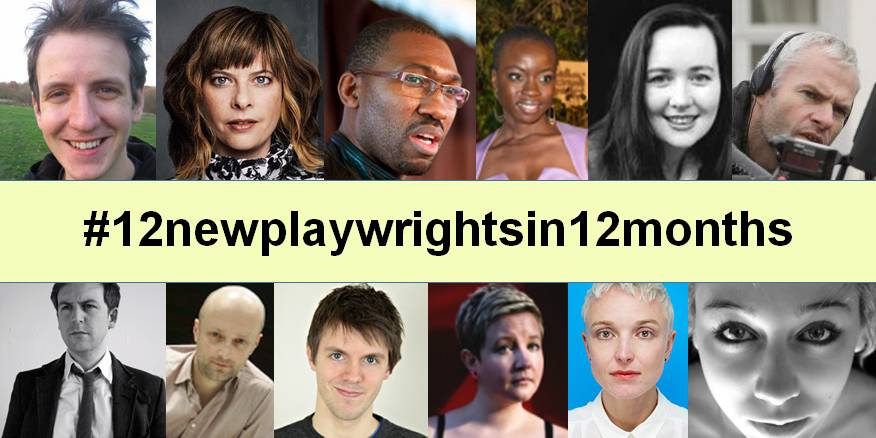
Marina Carr, Danai Gurira, Jennifer Haley, David Harrower, Dawn King, Kwame Kwei-Armah, Martin McDonagh, Alistair McDowall, Duncan Macmillan, Stef Smith, Polly Stenham, Jack Thorne
(Click on a name above for that blog entry)

The writer that’s had the biggest impact on me is Alistair McDowall: I saw his play Pomona and read it and then reread it to figure out its structure. It’s a play that talks to a modern audience and entertains as well as comments on how we live now, which is exactly what I want to do with my work. If you haven’t seen it or read it, DO!

The writer I found most affinity with is Marina Carr: I read more than one of her plays actually, her mix of tragic drama and magic realism really struck a chord with me.

The writer who made me think most about my own style is Stef Smith: Her play Swallow is really beautiful and original and has really made me rethink how you can tell your story so it feels you’re both living the story with the character and you’re also watching them experience their story.

So what are the top 3 tips I picked up?

img_1649cropped

I’d encourage you to read all the plays I read this year, as each one is unique and you’ll get different tips from each, however, for me these boiled down to:

  • Use active dialogue all the time

Active dialogue can be different things, Duncan Macmillan uses it very differently than Stef Smith for example but actions revealing themselves through dialogue is the key to good drama.

This might sound simple but I’m guilty, as are other writers of putting in a good, beautiful reflective monologue that does nothing to move the action on and my biggest tip from my year is that all speech on stage needs to earn its place. If it’s not active take it out.

  • It’s ok to keep your audience in the dark

My second biggest tip is that you don’t need to tell the audience everything about the situation you’re writing in order for them to get it. Just because you’re introducing something new to them or something complex it doesn’t mean you have to over explain the world or the issue your play looks at. Good examples of this are Dawn King and Alistair McDowall, who actually goes a step further and positions the audience as detective, so it’s up to them to piece the story together as you get flashbacks and flash-forwards presented as forward narrative.

  • Follow your own style

This is the one that sounds so easy but actually, finding your own voice, understanding what that can do and taking it further to make a good, original play is tough. Something all these writers have in common is that they are doing something new with their work. A lot of writing competitions want something new told in a way they haven’t seen before and reading/seeing these plays this year has reminded me how confident and brave you need to be in doing something different with your work to really pull it off. Yes it may not always work but as a writer you need to keep innovating, keep forging your path until the world listens to your side of your story.

A funny thing happened when I was writing my first proper full length play Godless Monsters that was performed this year: I got scared. However brave I’d been with my shorts, e.g. The Birdcatcher, This is How I Lost My Memory, I Hope We Make It Through The Rain, when it came to a full length the task and my vision for it was so big, I didn’t go as far as perhaps I could have and although I’m pleased with how it went, somewhere I know that I was holding back as I was unsure of how far I could go. (And I’m currently working on developing this play into something longer and fuller).

Looking at these writers has really reminded me, and I hope its reminded you of just how good your plays can be if you really believe in the story you’re telling and try to write the best play you can.

It’s been a wonderful year of discovery, reflection and learning and I will definitely keep looking for plays by new writers I haven’t looked at before, to not only get inspiration, but also courage, that however lonely playwriting sometimes feels, a lot of people have gone through the same thing, and their lessons are plain to see in the plays they write.

Here’s to 2016 and all the amazing new plays out there to be discovered and to be written!

Lucy x

Posted in Culture, Inspiration, performance, Script, Theatre, Uncategorized, Writing | Tagged , , , , , , , , , | Leave a comment