‘A play is a backward explosion’, That Face by Polly Stenham, December’s playwright #12newplaywrightsin12months

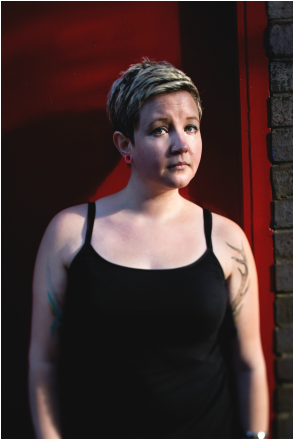
Polly

“Polly” by Twobster7 – self-made Own work, copyleft, attribution required (Multi-license GFDL, all CC-BY-SA). Licensed under CC BY-SA 3.0 voa Commons.

Part of the Royal Court Young Writers Group, Stenham was 18 when she wrote That Face, the play she submitted at the end of the course that went on to be produced at the Royal Court and the West End. She wanted to write a play about the possible lives of the people attending this famous Chelsea theatre, who live in some of the most expensive property in London and go to the Royal Court to be shocked by the latest theatre but rarely see people like themselves on stage. It also started her exploration of broken family relationships and That Face is now the first of a trilogy where she explores the ‘animalistic side of human nature,’ ‘what you’d really do when someone’s not looking’ and ‘places that aren’t policed’. (All 3 quotes are from this video interview

So what did I learn?

img_1649cropped

  • Sometimes the best stories are the simple ones

The story of That Face is simple. The 1st scene (which is more like a prologue) incites the action that involves the rest of the play: a school prank goes wrong, the daughter is sent home, her father is called and he comes back from Hong Kong and sends the mother (who’s supposed to be looking after both of their children but who’s been having a mental breakdown) to a mental institution. There are about 4 scenes that are placed outside the home, and the rest are set in the elder brother’s bedroom (he’s been trying to look after their mother after dropping out of school).  There’s no real subplot, the piece moves through the action well and it’s made me think that a play like this must really please its audience: it’s straight forward, not overly complex and you just don’t know how it’s going to be resolved.

Stenham says now that she thinks she was just in the right place at the right time for this play to be picked up. I wonder whether there’s a certain amount of truth in that as with all the talk these days about original work and telling a story not heard before, I’d certainly never think of just telling this kind of story. However, Stenham also says that she felt the audience at the Royal Court had not seen themselves on the stage in this way -a reminder to us all that if you get the right audience in front of a story that directly speaks to them, you’ve got the chance at a very successful play.

  • Make your play explosive

Stenham says someone described writing a play to her as a ‘backward explosion’: after you’ve had your explosion of ideas and creativity it all gets sucked into this play like a bomb ready to be set off by the action of the play (find the quote in this video interview), and that feels like a fitting analogy not only for writing plays but for the play she’s written, though That Face is definitely a forward explosion. When I’m writing I often start thinking about the end (though I don’t realise it). I start thinking about the tussle that’s at the heart of the play and the mass devastation that will occur and then work back from there. I’ve written about plays being a time bomb before (here) but thinking about the process of writing as a backward explosion and even perhaps structuring your process around the mass devastation that will occur later and working back to find out what creates this explosion, and then who serves the bomb up for the characters is a really useful way of thinking about your work in progress. There’s not only a time bomb in That Face -we need to sort things out before Daddy arrives- there’s also an expectation bomb as well which perhaps creates the biggest devastation: when the mother refuses the son’s help and she leaves because his father has told her to, the audience are left wondering if the character of the son will ever get over the shock of his mother (and the centre of his life for so long) leaving him and essentially choosing the father’s help over the son’s. The bomb Stenham plants explodes in the family’s face.

  • Give room for big performances where everything is at stake

Now I know Stenham wasn’t thinking about a West End transfer at all for this show -you can’t think about that kind of thing when you’re writing your first play- however I can absolutely see why it did transfer. At its heart, which has no mention in the action I described in my first bullet (which is an important point to make), is the strange intense relationship between the mother and the son, which becomes the main obstacle to a quick resolution of the story.

There are some lovely intense, challenging acting piece for both mother and son characters and I can imagine when you see the play these performances are thrilling to watch. When my play Godless Monsters was presented this year, I hadn’t quite realised what a great character Esther was for an actress to play until our actress Michal Keyamo was performing her. There are only 2 characters in my play but Esther has the largest emotional range as she goes from the highs of being saved from drowning by God to the depths of despair as she her lover ends their affair. Like Henry, the elder brother in The Face who wants to be the one to save his mother from her mental illness, you see Esther’s struggle against forces she cannot control and it’s this battle that gives actors a lot to play with so they can make the character their own. I remember sitting in the auditorium watching Mikki’s performance thinking how beautiful she’d made my words and how your script, with a good actor, is purely a map for their emotional journey, and it’s their performance that connects those words to the audience successfully. That may be an obvious point, but if you can make sure you give characters intense emotional moments and scenes where they’re fighting against something more extreme, this is not only thrilling for an audience and gets your point across in a way that can’t be ignored, but also, for That Face, means that it has the room to become a star vehicle for a West End run. Matt Smith and Lindsay Duncan played the son and the mother in Stenham’s play and I think another reason why it so swiftly transferred to the West End was because the play gave them a chance to show people what they can do.

Posted in artists, Culture, Inspiration, performance, Script, Theatre, Uncategorized, Writing | Tagged , , , , , , , , , , , , , , , , | Leave a comment

‘My first play, Foxfinder, was read, liked, but not produced by basically the theatres that accept scripts’ Dawn King, November’s playwright #12newplaywrightsin12months

‘My first play, Foxfinder, was read, liked, but not produced by basically the theatres that accept scripts – and not just in London. I’d had lots of meetings with people who said they liked it, but that it was a bit weird, or an unknown quantity. Even if they were interested, they didn’t know how to package it, until it won the Papatango Theatre Company writing competition.’
Dawn King interviewed by Ideas Tap here

Dawn King now writes for theatre, film and TV and is currently working on an adaptation of Aldous Huxley’s A Brave New World which will be touring the UK. It hasn’t always been like this. No one wanted to produce her play but she won the Paptango writing award and suddenly her career blossomed. This month I looked at the play that started it.

img_1649cropped

So what did I learn?

  • Your play doesn’t need to be high drama to be chilling

When I trained as a director I attended some workshops with Katie Mitchell. She’d just opened Ivanov at the National Theatre and was very concerned with Stanislavski’s last phase: the method of physical action. Now I’m a writer I find this teaching haunts me. When I’m writing a scene my thoughts are ‘what is the intention behind this moment of action’, and I find myself thinking in ‘events’ (the way Mitchell taught us to breakdown the script where after you unit the scene, look for the little ‘events’ within that scene and this will give the scene shape: so you then focus on the pre event, event, and then post event in each unit which will help the scene to flow and also peak and trough).

I’m mentioning this because I’m always intrigued when I read plays that are not written in this way. Yes there are events in each of the scenes King writes, but she’s not concerned with a pre-event, event, post-event. There are a lot of small quiet scenes that build to the climactic event in the penultimate scene.

I don’t tend to write quiet scenes. I tend to write rather loud dramatic pieces where the characters are desperately trying to hold on to whatever it is they’re losing control of. Unless someone’s life is somehow in danger and the stakes are raised maybe by extreme behaviour it doesn’t feel dramatic enough for me…

So one of the biggest tips I’ve learnt from this award-winning play, is that slow, subtle scenes that build to a rather incredible event at the end are ok and actually hold your attention very well. The writing doesn’t meander either which, if this was written for television it may do.

  • Always make the personal political

Of course I’m aware of this already and as a writer I’m very interested in ways that the personal/smaller stories you tell resonate with wider politics.

In an interview about Foxfinder King has said she never wanted to

‘present a polemic, but to explore the themes of paranoia.’

‘In the play, we’re dealing with a world in which a person has the power to come into your house, and is dangerous, and you can’t shut the door on him. I find the power of belief interesting and scary.’

Both quotes are from this interview.

It’s a subtle piece that takes an unnerving look at a countryside you recognise, but at the same time you don’t. You don’t have to be loud, brash and dramatic to be chilling, or to make the events of your play resonate with wider politics… Lots for me to think about on this as I’m planning to redraft a piece I wrote a while ago -this may just be the key to re-visioning it.

  • Even if you use fantasy/sci-fi elements, you don’t need to give the audience too much info

This is also something that I found in the 2015 Papatango award-winning play that I saw: Tomcat, which is also set in a future similar to our own as Foxfinder is. With events such as foot and mouth and the B.S.E crisis we are used to seeing farms in difficult times, but King still didn’t explain much about the situation the farmers were in and how the society had got to the point of blaming the fox for their problems and possibly eradicating the species. There’s maybe only one or two lines about it but that’s all you need as an audience member/reader because we go with what we’re given if the story in front of us is engaging and speaks to us on a truthful level. It reminded me a bit of Caryl Churchill’s Far Away and how that piece also unnerves you by presenting this future reality through the actions of the play rather than describing the world with exposition (which is always the best way to present any drama).

So once again lots to think about for my own writing, and I hope yours too!

December’s playwright

Polly

Polly” by Twobster7 – self-made Own work, copyleft, attribution required (Multi-license GFDL, all CC-BY-SA). Licensed under CC BY-SA 3.0 via Commons.


For my last blog in this series I’ll be looking at Polly Stenham and her first play which premièred at the Royal Court before going to the West End, That Face.

Posted in Culture, Inspiration, performance, Script, Theatre, Uncategorized, Writing | Tagged , , , , , , , , , , , , , , , , , | Leave a comment

Stef Smith looks at the ‘chaotic ways in which we continue’ in Swallow, October’s playwright #12newplaywrightsin12months

Stef Smith

Stef Smith, ‘one of Scotland’s most talked about playwrights’ -The Scotsman (www.stefsmith.co.uk)

A friend of mine saw Stef Smith’s new play Swallow at the Edinburgh Fringe Festival this year and said I just had to read it! Smith wasn’t a writer I’d heard of and when I discovered she’d won an Olivier award in 2012 for her play Roadkill I felt a bit out of touch. However, I’m glad to say I have read this fantastic play and with inspiration from Sarah Kane in her work, she presents a beautiful, hopeful piece that takes theatre to its the limits.

So what did I learn from this one?

img_1649cropped

  • Don’t worry about stage directions, establish 3 characters and let them tell the audience what they’re doing

Swallow reminded me of For Colored Girls Who Have Considered Suicide / When the Rainbow Is Enuf and even though this isn’t a choreopoem, it does feel like 3 intersecting poems at the start with each character reflecting on what they’re doing. The writing is so image-full that you don’t need stage directions and even though the writing is reflective it’s active in a different kind of way -a lot of the action is described which gives the director a lot of space to envision what the characters are doing and how it will best work on stage.

  • Shifting out of reflective/described action to actual action means you see each character through their own eyes

It felt novelistic in many ways as instead of seeing the action unfold (I often think of theatre as being about the space between the actors as they take decisions in front of you driving the story forward), Smith has her characters, when they are in the moment of action, say their words of dialogue and also some comments on the situation they are experiencing. (Almost like the judgements and comments you may say to yourself in your head while you’re having a conversation with someone). It leads to a richer sense of each character and as Smith says in her forward to the printed edition, this play is about the ‘chaotic ways in which we continue’ by which she means exploring the anger and dissonance we have inside us, and she cleverly brings the audience inside and between the characters by using this descriptive/active dialogue. We are not apart from them, we are with them in every moment.

  • 3 separate characters with separate stories intersect and move the story on in a very interesting way

Ok so this is nothing new, however I’ve been really inspired by the way Smith does it. The quick fire intersecting moments of speech from all 3 characters peppered with longer speeches brings a vitality to the text that makes it feel like dialogue when it isn’t. Later on and by the end of the play when all 3 characters have met and through each other their lives have changed, it all wonderfully knits together in a way that you don’t realise it will, because the whole play has been written like this. Suddenly you can see the patterns between all the characters and maybe where they become everywomen that we can all relate to. I loved this quality about the play as all 3 characters are extreme, yet somehow by the end, I felt I could relate to them all. Something I’m definitely taking inspiration from for my current rewrites.

I think Smith has a play at Royal Court next year which I’ll definitely be checking out. For more info on her work check out her website.

November’s playwright

Dawn King

Dawn King (image: http://www.dawn-king.com)

I know I’m running a bit late with this series but I’m currently working on rewrites for one of my plays and with a full time job as well I only get so many hours in a day. However November’s playwright will be Dawn King as I have her Papatango Prize winning play Foxfinder in my bag ready to read.


Posted in artists, Culture, Inspiration, performance, Script, Theatre, Uncategorized, Writing | Tagged , , , , , , , , , , , , , | Leave a comment

David Mamet’s tips for playwrights, care of @parisreview #inspiration #learnfromthegreats

David_Mamet

David Mamet, photo by David Shankbone from Wikipedia: https://en.wikipedia.org/wiki/David_Mamet

There are some great interviews in The Paris Review’s archives, free to read, if you want to hear how some of the great writers create their work. Here are some tips from American playwright David Mamet:

  • ‘Well, you know, Hemingway said it once: “To write the best story you can, take out all the good lines.”’
  • ‘Cutting, building to a climax, leaving out exposition, and always progressing toward the single goal of the protagonist. They’re very stringent rules, but they are, in my estimation and experience, what makes it easier for the audience.’
  • ‘Get into the scene late, get out of the scene early.’
  • ‘I think the process of writing a play is working back and forth between the moment and the whole. The moment and the whole, the fluidity of the dialogue and the necessity of a strict construction. Letting one predominate for a while and coming back and fixing it so that eventually what you do, like a pastry chef, is frost your mistakes, if you can.’

And some tips on how to differentiate whether you’re writing a drama or a tragedy (if you’re not sure):

  • ‘Drama has to do with circumstance, tragedy has to do with individual choice. The precipitating element of a drama can be a person’s sexuality, their wealth, their disease . . . A tragedy can’t be about any of those things. That’s why we identify with a tragic hero more than with a dramatic hero—we understand the tragic hero to be ourselves. That’s why it’s easier for the audiences initially to form an affection for the drama rather than the tragedy. Although it seems that they’re exercising a capacity for identification—Oh, yes, I understand. So-and-so is in a shitload of difficulty and I identify with them, and I see where the going’s bad and I see where the hero is good—in effect they’re distancing themselves, because they’ll say, “ell, shit, I couldn’t get into that situation because I’m not gay, or because I am gay, because I’m not crippled or because I am crippled . . . They’re distanced. Because I can go on with drama. That’s the difference between drama and tragedy.’
  • ‘A tragedy has to be the attempt of one specific person to obtain one specific goal, and when he either gets it or doesn’t get it, then we know the play is over, and we can go home and put out the baby-sitter.’

And as an example, when writing Oleanna, Mamet says ‘Classically it’s structured as a tragedy. The professor is the main character. He undergoes absolute reversal of situation, absolute recognition at the last moment of the play. He realizes that perhaps he is the cause of the plague on Thebes.’

All these quotes can be found in this interview here. Happy reading! And writing!

Posted in artists, Culture, Inspiration, performance, Script, Theatre, Writing | Tagged , , , , , , , , , , , , , , , , | Leave a comment

Taking the audience to new worlds, Alistair McDowall’s Pomona, September’s playwright #12newplaywrightsin12months

I’m a tough customer when it comes to watching a play because I want it to really challenge my views on something and make me think, not just entertain me. So I only tend to go to see shows I’m sure I’m going to like or are written by a writer/ directed by a director/company /at a theatre I know I like because it’s so depressing to go see a show that just doesn’t touch you in anyway at all.

That’s why my #12newplaywrightsin12omnths project where I see or read a play by a writer I don’t know every month has been great this year. I’ve seen and read some pieces I never would’ve done and I’ve discovered some gems like this one:

Pomona_Poster

The poster for Pomona (above) if you ask me looks brilliant and I said to my friend I saw the show with: ‘this play is never going to be as exciting as this poster image, I mean, someone with a squid mask on, I’ve never seen that in a theatre. No one’s going to do that!’

However, I was wrong.

Pomona blew my socks off and it’s very possibly my show of the year, as not only was the writing brilliant, but the directing, acting, set design, sound, everything coalesced to give a fantastic theatrical experience and was a real lesson in how far you can take the audience and still communicate something very true with depth.

Alistair_McDowall_Photo

Alistair McDowall, the playwright behind the show, won the Bruntwood Prize for Playwrighting a few years ago and his play Pomona was commissioned by the Royal Court for the Royal Welsh School of Drama before it went to the Orange Tree in Richmond and then transferred to the National Theatre in London before going to the Royal Exchange Theatre in Manchester.

There are some great interview available on why and how he wrote it (theatre voice, write a play & an article in the guardian on his style).

I learnt lots from watching and then reading the play afterwards and here are my top 3 tips:

img_1649cropped

  • It’s ok to keep the audience in the dark

So this play isn’t chronological, it goes forward and back in time jump cutting to different strands of narrative between characters who all fit in a story but who don’t all know each other and no one person oversees all the action. I actually had to read the script and then write down what I thought the time period of each scene was in an attempt to find their chronology. It moves around a lot in time and some scenes happen simultaneously if you look at it in this way. The scenes are short too, some very short and this adds to the role the audience ends up having: you become a detective trying to piece the pieces together. I haven’t experimented with a disjointed chronology but this has definitely given me the challenge to have a go. McDowall got a good balance of jump cutting towards the beginning and then longer scenes that explained a bit about what was going on. He also made sure that the quest within the play was spelled out at the beginning so if you did feel lost later on you had that to cling to.

  • Setting can become a character and theme can hold the play together

The only constant through all the jump cuts is place: we are in Manchester and the city (where all roads lead to Pomona) may as well be a character in the play itself. This gives the quest set at the beginning -Ollie is looking for her twin sister- a mysterious quality as the city seems to have its own laws. However whether the characters are searching for Ollie or not, through the play we learn that all the characters are searching for the same thing: the city is a place where you’re on you’re own and it’s hard to meaningfully connect with anyone, everyone is searching for that person or thing that will bring them out of their despair. This eventually gives us a connection to all the characters and the parts they play in search for or the hiding of Ollie.

  • Make magic for a better audience experience

The play is inspired by many things: McDowall’s late night drive round the M60, sci-fi novels, comics and films. In this interview McDowall says

”There are no rules in theatre – you can do anything”

“In theatre, I can do whatever I want. No one is going to say, ‘Don’t put a time machine in your play.'”

That’s something I love about theatre too, which is why you get goats in Africa and men eating live flying birds in my plays.

In order to give as he puts ‘a better audience experience’ (in this interview) he deliberately keeps the audience guessing by SPOILER ALERT having the actress that plays Ollie also play her twin sister, which adds to the mystery of the whole play as you wonder if you’re in a game or if there even was a twin or… well it just makes you wonder and makes the play feel slightly magical in it’s complexity. Like the moment you realise NEO is the ONE in The Matrix

My lasting memories of this play will be this sense of magic and it’s tender heart but brutal moments too. I will definitely be trying some of these tricks in my own work!

Stef SmithOctober’s playwright

As you can see I’m a bit behind on my October playwright, but I have a copy of Stef Smith’s Swallow in my bag to read so she will be my next focus.

Posted in artists, Culture, Inspiration, performance, Script, Theatre, Writing | Tagged , , , , , , , | Leave a comment

Why make theatre at all? David Lan shares his inspiration @intlifemag

image

When I’m starting a new project as I am at the moment, I always ask myself WHY is this theatre? HOW can I give the audience a better experience of the story that will unfold in front of them so they’ll really think about the issues I’m writing about after the play is over? WHY am I telling this story now?

Looking at Intelligent Life magazine is month there’s a great article where Young Vic director David Lan talks about his inspiration: Natalia Koliada (find the article here) and how she inspires him to remember the reason why theatre is so important to cultural and political expression.

She is the artistic director of the Belarus Free Theatre, who despite no longer being able to make work in her home country because of police raids due to the repressive society in Belarus (they are now based in London), they still make political work designed to express and provoke emotions and opinions as they campaign for freedom of expression and human rights.

I haven’t seen their work myself, though Miki, our actress in Godless Monsters this year told some fascinating stories about working with them. There’s a festival to celebrate their work in London in November this year which I’m going to try and catch, but just reading this article is making me want to go further, write better to express the issues I write about in the attempt to more directly reach my audience.

Theatre is a live artform and the show is only complete after the audience has seen it. That’s the magic of it, but that also holds its power.

Posted in artists, Culture, Inspiration, performance, Theatre, Writing | Tagged , , | Leave a comment

‘We’re not supposed to keep secrets in here’, update #DebraProject with @ToTheMoonUK

image1

‘We’re not supposed to keep secrets in here, so I’ll tell you … This might sound a bit strange but you’re in here too so I expect you’re used to strange … There’s a monster, living underneath my bed.’ –quote from my script The Debra Project

Since our workshop last year, which revealed many things, including why a shadowy hand is sometimes better than a monologue (see my blog post on that here), I’ve finished a new draft of the script and in several meetings with director Sharon Burrell, we’ve decided to take this project in a very exciting direction.

Sharon has been working with You Are Already Dead at Camden People’s Theatre creating a digital installation Glitter and Smoke with Performance artist Natalie Wearden see the video here:

This has lead us to look at The Debra Project in a very different way and rather than the usual writer director relationship this is going to be more of a collaboration between us to test the boundaries of text-based practice in the communication of psychological experience:

Inspired by shared experiences of clinical and cognitive depression, the Project asks whether the experience of depression and the therapeutic process can be recreated through multi-disciplinary artistic expression to enable better understanding.   The Project will reflect the fragmentary nature of the source material through its “collage” form – the work being structured from a number of decentralised narratives each in different locations and different art forms over a period of time.

Look out for further updates coming soon!

Posted in art, Culture, digital art, Inspiration, performance, Script, Theatre, Writing | Tagged , , , , , , , , , , , , , , , | Leave a comment

‘I want people shaken up,’ David Harrower on his play Blackbird, August’s playwright #12newplaywrightsin12months

Harrower’s two hander Blackbird was an unexpected winner of an Olivier Award. It’s a concisely written piece that plays out over real time and explores what happens when a couple reunite after about 15 years. This is no ordinary couple though. She was 12, he was a neighbour and eventually did time in prison for their relationship. I enjoyed reading this piece so much I read it twice! I’ll definitely be looking at more of his work and I would encourage you to do the same as its not only an interesting piece there’s lots to learn and take from it.

So how did Harrower come to this subject? Well he was inspired by a newspaper article:
‘The story is based on a newspaper account of a man who travelled abroad to meet a 19-year-old woman he had encountered in a chat room online, only to discover that in real life she was much younger. That the couple pursued the relationship anyway intrigued Mr. Harrower, but it was a difficult play to write.’

He wrote the play for the Edinburgh International Festival, where ‘with its comparatively large budgets, [the play] had 15 characters, four locations, the ghost of Marvin Gaye (don’t ask) and a performance by a children’s choir (ditto).’ These quote are taken from an interview with the writer here.

On writing it Harrower says:

‘“You kind of have to go to these stupid places, sort of, to get back,” Mr. Harrower said ruefully. “So I went there. And then a genocide happened.” Exeunt a dozen characters.’ (Please see the link above for the full interview).

It’s made for a tense exploration of a love that is taboo and in opposition to the Duncan Macmillan I read last month, its dialogue is direct, but in a different way, it’s all about what the other character is trying to do to the other, especially when you realise towards the end that one of the characters has lied.

So what did I learn from this one?

img_1649cropped

  • Active dialogue isn’t just direct dialogue

There’s definitely something of Pinter about his dialogue which, as a Pinter fan I really enjoyed. You don’t know why the girl has come to see the man but the conversation almost instantly talks about their relationship and its impact on them. The dialogue is about what the characters are doing with the words, what the intention is behind them and their effect on the other as we join the characters in an exploration of what they want from each other now.

  • Characters searching for each other through their speech

The text on the page looks more like poetry than script. Its full of repetitions, incomplete sentences and I’d love to see the effect of this in performance, where I imagine it would feel very real and true to the moment as the characters search for a way to discuss the relationship they never got proper closure on from each other. I’m not sure if I could write in this way myself but I may have a go.

  • Plot reveal, keeping the audience in the dark

It’s quite clear that the story of their relationship is a difficult one for the characters to tell each other and although you realise they both haven’t stopped thinking about it, maybe for different reasons, actually being face to face finally brings with it a difficulty of telling the story about a relationship that at the time felt easy to get into. This means that all our attention is on the characters in this situation and the way the story of their relationship is revealed becomes paramount with twists in the disclosure of facts. Through reading it I felt my own perceptions of the characters shift and I was left swinging between each character’s rendition of the truth, which I would think would be very gripping on stage. The moment when you start to question everything you’ve been told about the male character and what the female character wants is stunning. A very good lesson in playing with perceptions in a taboo subject, and something I’m going to try to work with more.

I could write a lot more about this play, but I wouldn’t want to spoil it for you. If it’s on in a theatre near you, go and see it. If not pick up the play and have a read yourself.

September’s playwright

I’m seeing Pomona at the National Theatre this month so Alistair McDowall will be the next playwright I look at.

Posted in artists, Culture, Inspiration, Script, Theatre, Writing | Tagged , , , , , , , , , , , , , | Leave a comment

A masterclass in active dialogue: Duncan Macmillan’s Lungs, July’s playwright #12newplaywrightsin12months

‘Theatre is often tedious, irrelevant, ridiculous and smug. At its best, though, it cuts through the noise of everything else that’s competing for our attention and gives our empathy and imagination a workout.’  From an interview with Duncan Macmillan here.

In this quote Macmillan could be talking about his own play Lungs which I saw as part of the Paines Plough Roundabout season this summer. With just two characters playing ages from roughly in their 20s to their 80s with no set and purely dialogue pushing the story and setting forward your imagination is certainly given a work out in this modern love story.

So what were the key tips I picked up? Well…

img_1649cropped

All you need is active dialogue to keep the audience engaged

My attention could have easily waned. With no set, sitting in the round so I could see everyone else who was watching the show I could’ve easily been distracted by my own thoughts and not kept up with the plot. However, in this tightly written play there was no room for long speeches or scene setting, all dialogue is active and directly to the other character which directly engaged me with the story and the plot. Even the slightly longer speeches which were needed to expand the context/feeling of the situation were in direct response to a question from the other character, and this made the small poetic sections  peppering the speeches really stand out and catch your attention.

Don’t add unnecessary extras: you can create place well with no set or anything

Although Katie Mitchell has directed this play in Germany with 2 actors performing the dialogue whilst cycling on static bikes (see the trailer of this production here), Macmillan’s initial view for the play (and as I saw it) was for no set at all and just the actors creating a sense of place as the conversation carried on. Due to the active dialogue and the jumping from decade to decade (as the play feels like an ongoing conversation throughout the characters lives once we meet them) place becomes less and less important as the anxiety of the characters becomes more and more the focus of the play. It made me realise that for a good play to work you don’t need all the paraphernalia of set if the play itself doesn’t need it. I was engaged anyway and followed everything I needed with my own imagination.

Lots to think about for the new play I’ve just started to write…especially about paring the story down to only what’s necessary.

August’s playwright: David Harrower

As you can see I’m a bit late with my blog this month, partly due to me writing the frst draft of a new full length play. I’m half way through Blackbird by David Harrower though so he will be the next playwright I look at.

Posted in Culture, Theatre, Uncategorized, Writing | Tagged , , , , , , , , , , , , | Leave a comment

‘That’s as cinematic as you could get on stage.’ -Martin McDonagh, June’s Playwright #12newplaywrightsin12months

Now known more for his films In Bruges and Seven Psychopaths Martin McDonagh started as a playwright. Performed in 2003 although written in the mid 90s The Pillowman won an Olivier for Best New Play amongst other awards and is by his own admission his most cinematic piece for the stage. For a writer like me who who writes rather theatrical pieces, it was interesting to look at something where the dialogue is very much the focus of the drama.

So what writing tips did I pick up this month?

img_1649cropped

  • Simply telling a story on stage can be just as powerful as a monologue to get inside the head of the characters

The Pillowman is about the power of stories. Set in an undescribed totalitarian dictatorship the main character Katurian is a writer under investigation for 2 child murders as they have been killed exactly as described in some stories he has written. A little girl has also gone missing. Does he know where she is?

There are long sections where Katurian tells the stories he’s written defending his work and they do what a monologue can do: at once you’re opening up the character’s inner world, getting to know his tastes, what he thinks about, what his world view is. They’re not verbose. They are quite straight and simple as McDonagh lets the images in the stories do all the work. Yes, they are very dark, but the style reminded me how monologues or in fact stories told as stories on stage don’t have to be poetry to be poetic and resonant.

  • Push the boundaries of how you present your story

I agree with McDonagh. In the quote above ( found in this interview here) he’s referring to The Pillowman and the techniques he uses are definitely very cinematic but they work on stage too and are a reminder that fourth wall can be transcended even in what seems like a realistic piece. 2 scenes (including 1 scene which is an act of its own) is solely Katurian telling a story which is acted out with other actors playing the characters in front of the audience. If it was a film, this would be a voice over, but having the storyteller on stage reminds you that you’re watching a piece that is about stories. At the end of the play the dead rise and narrate the very last moments directly addressing the audience, pulling together the themes of story and the whole piece becomes a ‘story’ from one narrator.

It made me think even harder about how the very best plays use every moment they can to bring the piece together and make their point (if they have one), and I’m definitely going to be trying to go further with the new piece I’m working on to be more self-conscious of how the piece is packaged and presented to the audience.

  • Keep the audience guessing and they’ll go into dark places with you

I think I’ve written before that police investigations are not my favourite kind of drama as they end up being very static and without the techniques mentioned above I would’ve lost interest very quickly. However, the world McDonagh presents and the questions the play raises are interesting and relevant, and the twists in the story keep you guessing as it focuses you more heavily on the plot rather than the rather unpalatable subjects the play discusses. A good tip when working on tough material.

July’s playwright: Duncan MacMillan

A couple of years ago I went to a workshop run by MacMillan and in it he talked of a play he’d written about environmentalism, but that he’d written it through a love story. This play, Lungs, is showing in Paines Plough’s Roundabout on the South Bank so I’m going to watch it and see what tips I can pick up.

Posted in Culture, Inspiration, Script, Theatre, Uncategorized, Writing | Tagged , , , , , , , , , | Leave a comment